Home » Flora & Fauna in Nyungwe Forest
Flora & Fauna in Nyungwe Forest
Are you starting to plan a Rwanda safari to Nyungwe Forest National Park but wondering what kind of things to see there? Worry less, this detailed guide will give you all the details about the flora and fauna in Nyungwe Forest National Park that you will see during Rwanda tours!
Nyungwe Forest National Park is one of the most biologically rich destinations in Africa. Situated in the southwest of Rwanda, this forest national park is part of the Albertine Rift region, known globally for high levels of endemism.
Covering about 980 square kilometers, Nyungwe is home to hundreds of animal and plant species, including endangered primates, colorful birds, and rare orchids.
Its unique environment of montane rainforest, swamps, bamboo thickets, and high-altitude grasslands makes it a perfect refuge for diverse wildlife (animal and plant life).
Tourists who visit Nyungwe discover not only breathtaking scenery but also an unmatched biodiversity during safaris in Rwanda.
Whether you are interested in huge chimps, birds, or impressive mammals, taking part in Nyungwe forest national park safari activities like chimpanzee trekking, birdwatching, or studying unique plant species, you are assured of having an unforgettable safari experience.
This is a detailed breakdown of the fauna and flora in Nyungwe National Park!
About Nyungwe Forest National Park- A Biodiversity Hotspot

Nyungwe Forest National Park (Nyungwe National Park) was established in 2004, but the forest itself is thought to be one of the oldest in Africa, first reserved in 1903, surviving the last Ice Age.
The park is situated between the Congo Basin and the Nile River Basin, acting as a natural watershed and providing water sources for millions of people in Rwanda and neighboring countries. Nyungwe is often referred to as the “green heart” of Rwanda.
It lies in the country’s southwest near Lake Kivu and borders Burundi and the Democratic Republic of Congo.
Its strategic location in the Albertine Rift explains why it has such high levels of flora and fauna diversity worth exploring during Rwanda tours/Wildlife safaris in Rwanda.
Top Habitats in Nyungwe Forest National Park Where Unique Flora and Fauna Are Seen
The impressive fauna and flora of Nyungwe National Park are found in several habitats and ecosystems inside the park, and some of the major ones hosting incredible populations include.
Nyungwe Forest
The main Nyungwe forest is a dense tropical montane rainforest with towering trees, thick undergrowth, and vines where most animals find refuge.
Here, tourists can encounter chimpanzees, colobus monkeys, and numerous bird species. The forest is also home to giant mahogany trees, many of which are centuries old, that are seen during the famous Nyungwe Forest Canopy Walkway.
Cyamudongo Forest
Located about 45 minutes from the main forest on the main road towards Cyangugu, Cyamudongo Forest is a smaller but vital annex of the park as it hosts some of the most remarkable flora and fauna species of Nyungwe National Park.
This area is especially famous for its community of chimpanzees, which are often easier to track during the dry season. Other primates like Dent’s Mona monkey and L’Hoest’s monkey can also be spotted.
Gisakura Tea Estate
This working tea plantation borders the park and offers a unique blend of human activity and wildlife often seen during tea plantation tours in Rwanda.
A forest patch within the estate is home to around 50 Rwenzori colobus monkeys. Visitors here can enjoy tea-tasting experiences while also spotting monkeys and birds like the African golden oriole and crimson-wings.
Bigugu Mountain
At 2,950 meters, Bigugu Mountain is the highest point in Nyungwe National Park, and it is home to some of the unique montane vegetation and animal species.
The vegetation here is dominated by alpine shrubs and flowers such as giant lobelia. The climb offers tourists panoramic views of the forest national park and Lake Kivu.
Cyinzobe Area
The Cyinzobe area is one of the best spots for guided hikes in Nyungwe Forest National Park, which also features some of the unique animal species in this park.
It hosts rare primates like the Owl-faced monkey and is also good for bird species such as the regal sunbird.
Hiking Trails
Nyungwe boasts more than 13 hiking trails, including the famous Umuyove Trail, also called the Mahogany Trail because of the dominance of this tree species. These trails make it easier for tourists to discover wildlife, orchids, and butterflies at a given place and time during Rwanda safaris.
Traverse any one of these habitats in Nyungwe forest national park and see all the remarkable flora and fauna in this Rwanda wildlife safari park!
The Fauna in Nyungwe National Park
The fauna in Nyungwe National Park, most of which is endemic to only this region, is another of the worthwhile things to see during Rwanda wildlife tours. These include.
Primates In Nyungwe National Park

Nyungwe is a primate paradise with 13 primate species recorded, often seen during Rwanda primate tracking safaris. These include.
- Chimpanzees (Pan troglodytes): The park is famous for hosting over 500 individuals in the main forest and Cyamudongo Forest often seen during Rwanda chimpanzee trekking safaris in Nyungwe. The huge and endangered chimpanzees are playful, social, and fascinating to watch.
- Ruwenzori Colobus Monkeys (Colobus angolensis Rwenzori): Nyungwe has the world’s largest groups of these monkeys, sometimes up to 400 individuals, often seen during Rwanda colobus monkey tracking tours.
- Other primates: Tourists can also see L’Hoest’s monkeys, blue monkeys, owl-faced monkeys, red-tailed monkeys, grey-cheeked mangabeys, golden monkeys, eastern needle-clawed galago, olive baboons, and vervet monkeys. Nocturnal primates like bushbabies can be spotted during night walks.
Birds In Nyungwe National Park
With over 320 recorded bird species, including 29 Albertine Rift endemics, Nyungwe is one of Africa’s finest birding destinations.
Notable birds of paradise in Nyungwe include:
Albertine Rift Endemics (ARE)
| Albertine Owlet | Archer’s Robin-Chat | Blue-Headed Sunbird | Dusky Crimsonwing |
| Grauer’s Swamp Warbler | Handsome Francolin | Kivu Ground Thrush | Kungwe Apalis |
| Mountain Masked Apalis | Neumann’s Warbler | Purple-Breasted Sunbird | Red-Collared Babbler |
| Red-Faced Woodland Warbler | Red-Throated Alethe | Regal Sunbird | Rockefeller’s Sunbird |
| Ruwenzori Apalis | Ruwenzori Batis | Ruwenzori Nightjar | Ruwenzori Turaco |
| Shelley’s Crimsonwing | Strange Weaver | Stripe-Breasted Tit | Yellow-Eyed Black Flycatcher |
Other Notable Species in the Nyungwe Park include.
- African Hill Babbler
- Bar-Tailed Trogon
- Dwarf Honeyguide
- Great Blue Turaco
Birdwatching in Nyungwe NP to see these species of birds is best during the blooming time of fruiting trees, which attracts birds in large numbers.
Other Wild Animals in Nyungwe National Park
Apart from primates and birds, Nyungwe is home to over 85 mammal species. The forest species in the Nyungwe Park include:
- Forest elephants (smaller than savanna elephants)
- Buffalo (though sightings are rare – the “last buffalo” was reportedly seen years ago)
- Black Fronted Duikers, bushbucks, and giant forest hogs
- Reptiles, amphibians, and over 120 butterfly species also thrive in the park’s ecosystem.
It is important to note that the leopard, golden cat, and serval are rarely spotted due to the thick forest.
Flora and Plant Species in Nyungwe Forest National Park
Nyungwe Forest National Park in Rwanda is one of Africa’s richest centers of floral diversity, containing over 1,068 plant species, including more than 200 tree species and 140+ orchids.
This makes it one of the largest blocks of montane forest national park in East and Central Africa, and among the most ancient, dating back to the last Ice Age.
Diverse Vegetation Zones
The vegetation in Nyungwe Forest varies with altitude, creating multiple habitats that sustain both flora and fauna.
- Low elevations (~ 1,900m): Towering trees such as Carapa, Newtonia, and Entandrophragma excelsum (African mahogany, locally called Umuyove).
- Mid-level altitudes (2,250m – 2,500m): Tree ferns, Podocarpus, Hagenia, bamboo, and shrubs.
- Higher elevations (up to 2,950m): Subalpine vegetation with bamboo thickets, alpine shrubs, and giant lobelia.
- Swamps and grasslands: Found in valley bottoms, adding to the park’s biodiversity.
Epiphytes such as mosses, ferns, and orchids thrive high in the misty canopy, surviving without soil. These “air plants” are characteristic of tropical mountain rainforests.
Some species, like Carapa grandiflora, provide fruits eaten by chimpanzees, monkeys, squirrels, and even local people.
Key Plant Species
- Mahogany (Entandrophragma excelsum): One of the tallest and most dominant trees, giving its name to the famous Mahogany Trail.
- Orchids: Over 248 species, many endemic to the Albertine Rift region.
- Unique Endemics: Species such as Begonia pulcherrima, Impatiens kagamei, and Impatiens nyungwensis are only found here.
- Medicinal Plants: Local communities rely on many species for traditional medicine, as documented in the Handbook of African Medicinal Plants.
Biodiversity Significance of the Nyungwe Flora
- The presence of diverse flora creates habitats that sustain Nyungwe’s rich fauna, including primates like chimpanzees, blue monkeys, and Ruwenzori colobus, as well as hundreds of bird species.
- The blooming time of certain flowers directly influences wildlife behavior, making it easier to spot birds feeding on nectar or primates searching for fruits.
- Nyungwe’s unique vegetation also provides a refuge for rare forest species, including those from the earlier Ice Age, meaning some trees and plants recorded here are not found anywhere else in the region.
- Nyungwe Forest National Park is not only a biodiversity hotspot but also a living laboratory for conservation and research.
- Its combination of ancient trees, orchids, and medicinal plants makes it a key area for ecological survival in Africa.
- The forest supports both wildlife and local communities that live side by side in this ancient forest, ensuring that the traditions, resources, and balance of nature remain protected.
Visit Nyungwe Forest National Park today and see all these unique flora and fauna species for lasting memories during Rwanda safari tours!
Nyungwe National Park Safari Activities to See Flora and Fauna
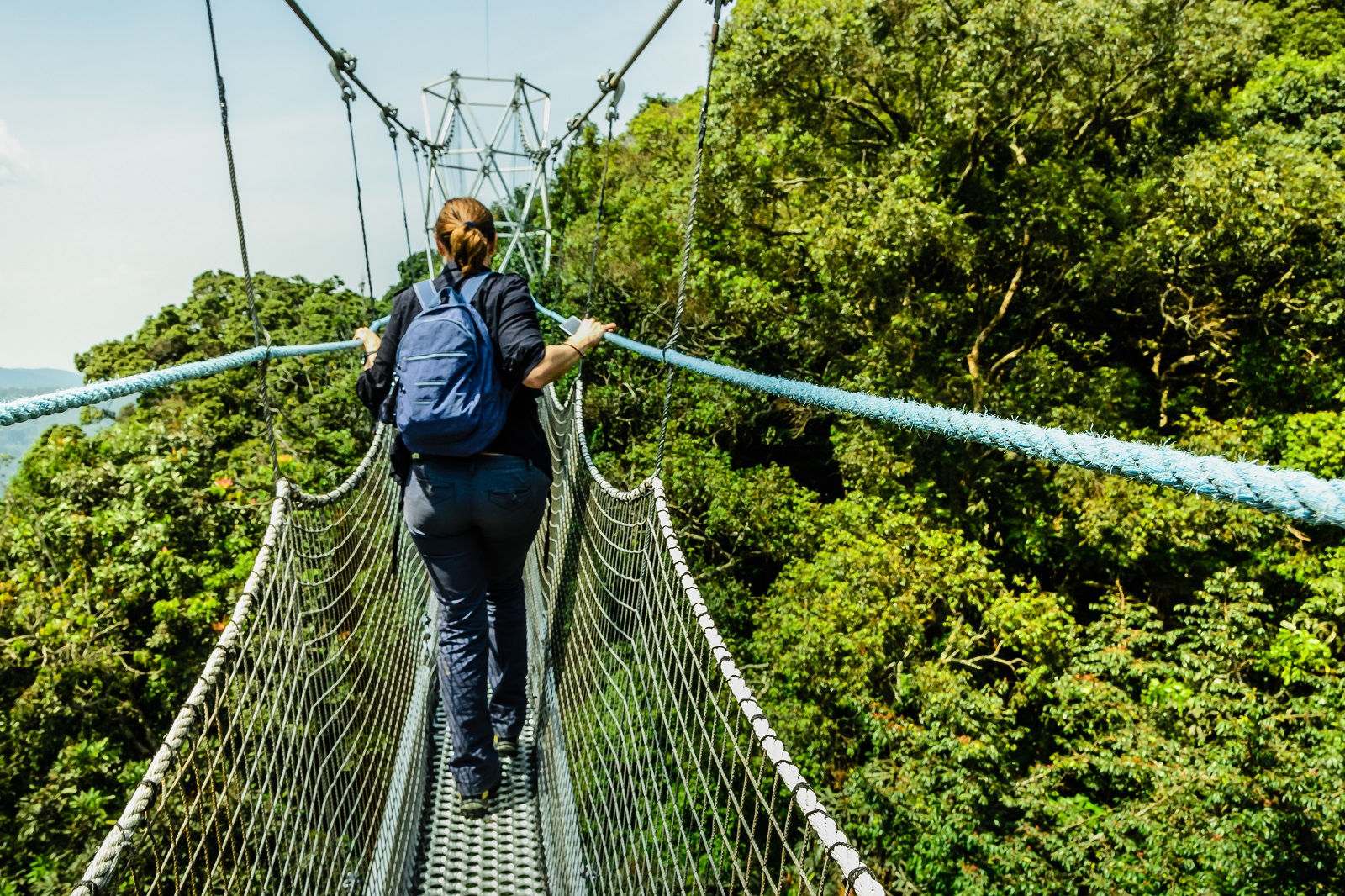
Some of the most popular activities tourists visiting Nyungwe National Park to see the flora and fauna it packs during Rwanda safaris can take part in include.
- Nyungwe Forest Canopy Walkway: A suspended bridge 50 meters above the ground offers tourists a good chance to spot monkeys, birds, and plants from above the forest canopy during safaris in Rwanda.
- Chimpanzee Trekking: The most popular activity, giving tourists an up-close look at the huge chimps. Visitors need to join an early morning trek to track semi-habituated chimpanzees in their natural habitat, with groups limited to a maximum of 8 participants during Rwanda chimpanzee trekking safaris.
- Chimpanzee Habituation Experience: Spend more time with chimpanzees as researchers study their behavior and dominance patterns during Rwanda chimp habituation experiences.
- Colobus Monkey Trekking: See large groups of colobus monkeys that are unique to this region, with perfect opportunities to take some stunning photos during the Rwanda holidays.
- Tea Plantation Visits: Learn how tea is grown and harvested while enjoying scenic landscapes, including the flora and fauna in the Nyungwe, and meeting surrounding community members.
- Bird Watching: Nyungwe is a birder’s paradise, especially during fruiting and blooming time. This safari activity presents opportunities for birders on Rwanda trips to see a lot of flora and fauna, including the birds.
- Guided Nature Walks: Explore diverse trails (15+ trails running over 130km) that reveal orchids, flowers, butterflies, and secretive animals in the diverse ecosystems of Nyungwe during Rwanda safari holidays.
- Mount Climbing: Hike Bigugu Mountain for stunning views and unique alpine flora during biodiversity safaris in Nyungwe.
- Monkey Trekking: Track species like blue monkey, owl-faced monkey, vervet monkey, and others during Nyungwe Park safaris, as well as see unique plant species en route.
- Nyungwe Night Walk: Join a night walk and spot nocturnal animals like bushbabies and owls in the diverse habitats of Nyungwe NP.
- Cyinzobe Hike: Discover primates, orchids, and birds along this unique trail that also offers amazing views of the forest, Kamiranzovu swamp, and waterfalls.
- Cultural Experiences: Interact with local people who live around the park and learn how they depend on and help conserve Nyungwe, and meet traditional healers using different plant species to cure everyday illnesses.
Rules and Guidelines to Follow During Nyungwe National Park Biodiversity Safaris
- Stay with your guide for security.
- Do not feed or disturb the animals.
- Respect the local community in surrounding areas and conservation rules.
- Avoid littering to protect the forest —carry back all waste to protect the environment.
- Stay on designated trails during hikes and forest walks.
- Maintain at least 7 meters distance from primates at all times.
- Do not visit the park if you are sick with a contagious disease.
- Keep quiet during wildlife encounters to avoid scaring animals.
- Flash photography is strictly prohibited when tracking primates.
- Smoking is not allowed inside the forest.
- Wear appropriate clothing such as long sleeves, a hat, and insect repellent for safety
Where to Stay in Nyungwe National Park During Biodiversity Safaris?
Accommodation ranges from luxury lodges to budget guesthouses:
- One & Only Nyungwe House – luxury stay within a working tea estate.
- Nyungwe Top View Hill Hotel – midrange option with panoramic views.
- Nyungwe Nziza Eco Lodge – Eco-conscious, budget to midrange lodge with birdwatching and forest trek tours.
- Gisovu Guesthouse – Self-catering, basic rooms overlooking Lake Kivu and Muzimu Mountain.
- Uwinka Campsites – Secluded campsites with Lake Kivu views, surrounded by valleys and hills
- Gisakura Guest House and other budget guesthouses around Gisakura tea estate.
Best Time to Visit Nyungwe Forest National Park to See Flora and Fauna
This rainforest, home to diverse plant species, primates, and a unique array of flora and fauna found in the Albertine Rift, can be explored year-round.
However, the best time to visit Nyungwe Forest National Park in Rwanda is during the dry season, from June to September and December to February, when the trails are easier and chimpanzee trekking in Nyungwe offers higher success rates.
However, the rainy months (February to May and October to mid-December) are particularly well-suited for birdwatching and blooming times.
How To Get to Nyungwe Forest National Park to See Flora and Fauna?
Nyungwe Forest National Park, situated 225 km southwest of Kigali near Lake Kivu in the Albertine Rift region, is accessible by a scenic 5–6 hour drive along the main road via Huye and Butare, or a 45-minute domestic flight to Kamembe airstrip followed by a short transfer.
Tourists can reach this forest national park through private transfers, self-drives, or guided safaris organized by licensed operators.
Some of the licensed Rwanda tour operators organizing the best tours include.
- Prime Safaris and Tours Ltd
- Wild Gorilla Safaris
- Gorilla Safari Rwanda
- Rwanda Gorilla Tracking Safaris
- Gorilla Tracking Rwanda
- Africa Safaris Tours
- Gorilla Safaris and Tours
Safari Prices To Incur on Nyungwe Forest Biodiversity Tours
Safari costs in Nyungwe Forest National Park vary depending on activities and accommodation.
Key expenses include chimpanzee trekking permits ($90–$250), canopy walkway fees ($40–$60), colobus monkey trekking ($40–$60), and guided nature hikes or birding tours ($40–$100).
Park entry fees range from $5 to $300 per day, depending on nationality and activities, while lodging options span budget ($50–$250), midrange ($100–$800), to luxury lodges ($200–$1,500).
Rwanda Safari Packing List for Nyungwe NP Flora and Fauna Tours
- Sturdy hiking boots
- Rain jacket (the forest is often wet)
- Binoculars for birding
- Camera
- Insect repellent
- Warm clothes for evenings
Consult with a reputable Rwanda tour operator on the most recommended items to pack for a Rwanda safari to Nyungwe to see the flora and fauna!
Threats Imposed on the Flora and Fauna in Nyungwe National Park
The biggest threats imposed on the flora and fauna in Nyungwe Forest National Park include:
- Poachers targeting primates and small animals for illegal bush meat
- Deforestation by local people near the park
- Agricultural encroachment as farmers encroach on habitats
- Past hunting that killed elephants and buffalo (leading to near extinction in the park)
- Climate change that destroys habitats
- Invasive species that destroy native flora and threaten the survival of Albertine Rift endemics.
Ongoing Conservation Efforts to Protect the Nyungwe Forest NP Biodiversity
- Park management and anti-poaching patrols improve security.
- Proliferation and regeneration of indigenous forest tree species
- Research on primates, plants, and birds supports biodiversity conservation.
- Tourism revenue benefits the surrounding community, encouraging protection.
- Rwanda Development Board partners with conservation organizations to ensure the survival of endangered species.
Other Attractions Seen in Nyungwe Forest National Park, Besides Flora and Fauna
- Isumo Waterfall – A scenic hike leads to this powerful and breathtaking waterfall hidden deep within the forest.
- Tea Plantations – Visit Gisakura Tea Estate and nearby plantations to experience Rwanda’s vibrant tea culture.
- Lakes and Rivers – Explore natural water bodies such as Lake Kivu and the Nyungwe River for relaxation and scenery.
- Hiking Trails – Over 130 km of well-maintained trails ranging from short, easy walks to challenging treks.
- Bigugu Mountain – The highest point in the park, offering panoramic views across Rwanda and into Burundi.
- Cyinzobe Area – A biodiversity hotspot teeming with primates, birds, and unique plant species.
Visit Rwanda’s Nyungwe National Park today and see all these firsthand for remarkable memories!
Flora And Fauna in Nyungwe National Park: Commonly Asked Questions
What Makes Nyungwe National Park Special?
Nyungwe Forest National Park, one of Africa’s oldest rainforests, hosts 13 primate species, hundreds of birds, diverse flora, endemic plants, and rich fauna, making it a key Albertine Rift biodiversity hotspot and, as such, special.
How Much Does It Cost to Explore Nyungwe?
Daily visits to Nyungwe Forest National Park cost $150–$300. Full safari packages, including accommodation and guided activities like chimpanzee trekking, canopy walks, and nature tours, may reach $1,200 per person.
How Long Is the Canopy Walk?
The Nyungwe canopy walk spans 160 meters, suspended 70 meters above the forest floor, offering stunning views of the dense forest, endemic birds, primates, and diverse plant species.
Which is The Most Visited National Park in Rwanda?
Volcanoes National Park attracts most tourists for mountain gorilla trekking, but Nyungwe Forest NP grows in popularity for chimpanzee trekking, bird watching, forest hikes, and unique flora and fauna experiences.
Conclusion
Nyungwe Forest National Park is more than just a park—it is a living library of flora and fauna. From towering mahogany trees to playful chimps and colorful birds, Nyungwe showcases the best of Rwanda’s natural heritage. Its combination of trails, wildlife, plants, and cultural experiences makes it a must-visit destination for every safari lover in Africa.
Contact us now and let us tailor the best Rwanda tour package for you to explore the flora and fauna in Nyungwe Forest National Park!
Want to visit Nyungwe Forest?
Want to visit Nyungwe Forest National Park, Rwanda's only chimpanzee trekking park for primate safari experiences?
